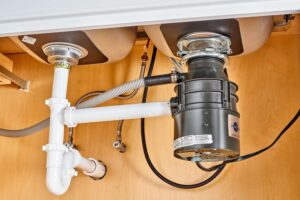
Sometimes, like our famous hurricanes, problems with your garbage disposal require professional backup. Watch for these warning signs:
- Rust spots
- Cracks in the disposal body
- Leaks that keep coming back
- Strange noises
- Persistent odors
Professional intervention becomes necessary when:
- Your disposal is over 8 years old
- Multiple leak points appear simultaneously
- Internal components show significant wear
- Repair costs approach replacement costs
- Electrical issues arise
Garbage Disposal Leak Prevention: Keep Your Disposal Running Smooth
Y’all know what they say – an ounce of prevention beats a flooded cabinet any day. Here’s how to avoid future leaks:
- Run cold water before, during, and after use
- Avoid grinding fibrous foods (save that coconut husk for the compost)
- Regular maintenance checks, especially before hurricane season
- Clean your disposal monthly with ice and citrus peels
- Never use harsh chemical cleaners
- Keep foreign objects away (no seashells, please!)
Maintaining your disposal isn’t just about preventing leaks. It’s about extending its lifespan and avoiding costly repairs. Think of it like maintaining your boat – regular attention prevents bigger problems down the line.
Daily Best Practices for South Florida Homes With A Garbage Disposal Leak
Living in Pompano Beach means dealing with unique challenges like a garbage disposal leak. Our humid climate can accelerate wear and tear on household appliances, including garbage disposals. Here’s what local experts recommend:
- Run your disposal at least once daily to prevent rust
- Keep it dry when not in use to combat humidity
- Schedule bi-annual maintenance checks
- Use disposal fresheners designed for humid climates
- Consider a rust-resistant model for replacement
Don’t let a leaky disposal rain on your parade. If these tips don’t solve your problem, our Pompano Beach team is ready to help. We’ve been fixing disposals longer than some folks have been catching fish off the pier. Your kitchen deserves the best care, just like our beautiful beaches.
Need professional help with that stubborn leak? Get your garbage disposal fixed by trusted local experts. Don’t let a small leak turn into a big problem – we’re here to help!
Garbage Disposal Leak – FAQ
Can I use plumber’s putty to fix a leaky sink flange?
Absolutely! Plumber’s putty is your best friend for sealing a leaky sink flange. Clean the area thoroughly, remove the old putty, and apply a fresh bead around the flange. Just make sure you’re using enough – about the size of a golf ball should do the trick. Let it set properly before running water through the system.
How long should a garbage disposal last in Florida?
In our humid Pompano Beach climate, expect 8-10 years from a quality disposal. However, with proper maintenance and regular care, some units can last up to 12 years. Factors like usage frequency, water quality, and maintenance routine play crucial roles in longevity.
Is it normal for a disposal to leak when dishwasher runs?
No way! If your disposal leaks during dishwasher operation, you’ve got an issue with either the dishwasher connection or the disposal’s inlet. Check the rubber connector and ensure it’s properly sealed. This is typically a quick fix but might require professional attention if the connection point is damaged.
Can humidity really affect my garbage disposal?
You betcha! Our famous Florida humidity can accelerate corrosion and seal degradation. Installing a dehumidifier under your sink or using anti-corrosion sprays can help protect your disposal from our tropical climate’s effects.
What’s the average cost to replace a garbage disposal in Pompano Beach?
In our area, you’re looking at $150-$450 for a new disposal, plus installation costs. The final price depends on the model you choose and whether you need any additional plumbing work. Pro tip: spending a bit more upfront on a quality unit often saves money in the long run, especially with our humid climate.
Why does my disposal smell even after cleaning?
Those funky odors usually mean food particles are stuck in hidden spots. Try this local trick: grind up some ice cubes with cut-up limes (grab ’em from Publix when they’re on sale). The ice scours the blades while the citrus deodorizes. If the smell persists, you might have food trapped in the baffle – that rubber flap at the drain.
How do I know if my disposal is the right size for my household?
For most Pompano Beach homes, a 1/2 HP unit works fine for couples, but families should consider 3/4 or 1 HP models. Think about it like sizing your A/C – bigger isn’t always better, but undersizing leads to problems. Count how many people regularly eat at home and choose accordingly.
Can I reset my disposal if it stops working?
Sure can! Look for a small red button on the bottom of the unit (you might need a flashlight). Press it firmly – if you hear a click, you’re good to go. If it keeps tripping, though, don’t keep resetting it. That’s like ignoring your check engine light – it’ll only lead to bigger problems.
Is it safe to use drain cleaners in my disposal?
Nope! Chemical drain cleaners are rougher on your disposal than a Category 5 hurricane. They can corrode the internal components and actually void your warranty. Stick to natural cleaners like vinegar and baking soda, or ice and salt for cleaning.
How often should I run my disposal to prevent issues?
Run your disposal at least once daily, even if you haven’t used it. Our South Florida humidity can cause internal components to seize up if left unused. Think of it like exercising – regular movement keeps everything working smoothly. Just run cold water and let it spin for about 30 seconds.