Installing Smart Faucets in Your Home
Smart home devices are becoming increasingly popular in the U.S. One Consumer Affairs study revealed that over 57 million Americans have and routinely use such devices. For those unfamiliar with them, smart home devices are internet-connected devices that homeowners can control via a smartphone, tablet, or voice command.
Some of the most popular smart home devices today include smart speakers, lights, thermostats, doorbells, and security cameras. While not yet as popular, smart devices are gaining traction in the residential plumbing sector. That’s because more homeowners are replacing traditional faucets in their homes with modern, high-tech smart faucets.
What Is the Difference Between a Traditional Faucet and Smart Faucets?
Smart faucets, like their traditional counterparts, are essential for controlling and dispensing water. Both involve regulating the flow, temperature, and pressure of water from a supply line, the network of pipes that transports clean, pressurized water from a municipal water line or private well to a home’s faucets, fixtures, and appliances.
But that’s where the similarities end. While they look aesthetically the same, smart, touchless faucets have built-in sensors that allow users to control them using hand motions, voice commands, or smartphone apps.
How Much Do Smart Faucets Cost?
Because they contain several electronic components, such as sensors, solenoid valves, and power sources, “smart” faucets, also referred to as touchless faucets, are more expensive than traditional ones.
The average cost of just one of these high-tech, modern-day faucets is between $300 and $400, depending on brand, features, and design, and an additional charge for professional installation.
Factors that influence installation cost include the type of power source needed for the faucet, plumbing accessibility, and overall plumbing complexity. Despite higher product and installation costs, many homeowners still choose these high-tech faucets over traditional ones. And they do so for several reasons.
Homeowners in Pompano Beach, FL, Explain Why Smart Faucets Are Worth the Investment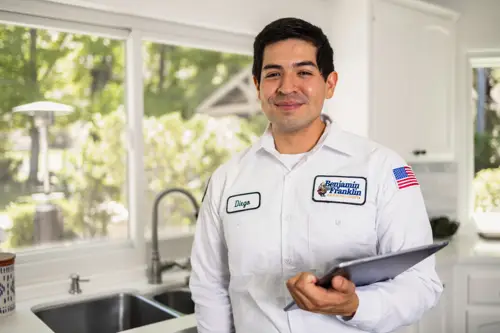
Many homeowners in Pompano Beach, FL cite the ability to save on their monthly water bills as the primary factor in their decision to upgrade from traditional faucets to smart, touchless faucets.
When installed in kitchens and bathrooms, smart faucets use roughly 1.5 gallons of water per minute, much lower than the 2.2 gallons per minute (GPM) or more used by traditional faucets. This lower GPM is attributable to the low-flow aerators, automatic shut-off, and precise water dispensing technology built into smart, touchless faucets.
Smart faucets also help Pompano Beach homeowners lower their electric bills by limiting hot water usage and reducing the need to reheat excessive water. But the benefits of touchless kitchen and bathroom faucets extend well beyond lower utility bills alone.
These modern-day faucets also offer the following:
- Improved hygiene – Whether in bathrooms or kitchens, faucets with touchless technology do a remarkable job of reducing the spread of germs and bacteria. That’s because homeowners don’t have to pull on handles or turn knobs to turn the water on and off, which significantly reduces the risk of cross-contamination.
- Reduced maintenance and cleaning – Since turning water on or off doesn’t require twisting knobs or pulling on handles, touchless faucets are not as prone to mechanical wear and tear. And because they are rarely ever touched, the knobs and handles on these faucets don’t accumulate as much grime and fingerprints, which means they are easier to keep clean than traditional faucets.
- Monitor water usage – Nearly all touchless faucets allow users to monitor water usage through a smartphone app. These apps show just how much water is being used in a home each month, which homeowners can use to identify possible water leaks or implement a water consumption saving plan to lower their monthly water bill.
- Preset water temperatures – From lukewarm to very hot, most touchless faucets allow homeowners to set an ideal water temperature. That means they don’t have to leave the faucet running while waiting for the water to reach a desired warmth, which can save energy. Preset temperatures also lower the risk of scalding injuries and exposure to harmful germs and bacteria.
- Kid-friendly operation – Reaching traditional faucets to wash their hands or brush their teeth can be challenging for young kids. Touchless faucets make life easier for them by allowing them to use hand motions or voice commands to turn the water on or off. And if they forget to turn the water off, the built-in automatic shut-off technology can do it for them.
- Exact water disposal – The vast majority of touchless faucets on the market today offer exact water disposal. This feature allows homeowners to program the precise amount of water their faucet should dispense at any given time. Exact water disposal reduces water waste, prevents overuse, improves energy efficiency, and contributes to sustainability.
- Stylish – Just like traditional faucets, touchless faucets can complement the kitchen and bathroom in almost any home. Some of the styles currently trending in touchless faucets are minimalist and sleek designs with matte black and warm metal finishes, especially brushed gold and light bronze.
The Downsides of Upgrading From Traditional Faucets to Smart Faucets
Smart faucets are more susceptible to malfunctions than traditional faucets due to their complex and advanced technology. And because they are battery-powered or receive power from a direct electrical source, they can become unusable when a power outage or battery failure strikes.
The average battery life in touchless faucets is 3 to 5 years. Lastly, if the sensors on a smart faucet malfunction or stop working completely, it can open the door to several plumbing system problems. Some of the more common ones include low water pressure, water failing to turn off, flooding, calcium and lime buildup, and plumbing leaks.
Discuss Smart Faucet Options With a Pompano Beach Plumber Today
While there are some downsides, touchless faucets offer numerous benefits. To learn more or for help choosing the right faucet for your home, consider scheduling a consultation with one of our Pompano Beach Benjamin Franklin Plumbing associates today.